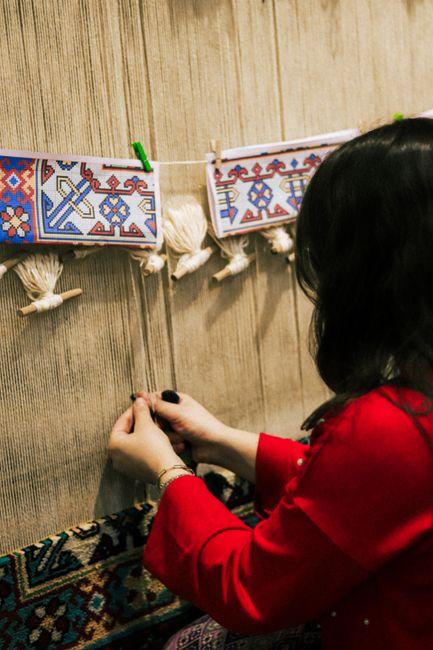
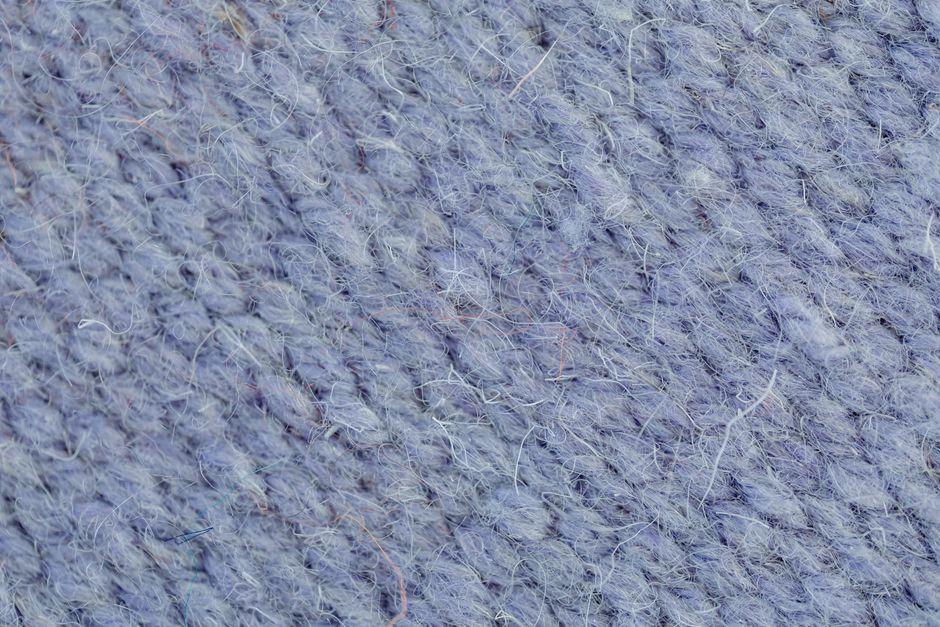
Unlike the Persian or Turkish knot, the Tibetan loop-knot is tied around a gauge rod, creating a row of even loops that are cut open afterward to form the pile. It's slower than other knotting methods, but produces exceptional pile density and a distinctively resilient, springy hand.
This is one reason Tibetan-technique carpets have remained almost entirely a hand craft, even as machine weaving has industrialized much of the broader textile trade.